



GMC Sierra 1500 vs Ram 1500 decisions get more complex when Wisconsin towing, snow, passengers, and cargo enter the picture. Both pickups offer several engines, cab layouts, drivetrains, and trim choices. Therefore, comparing badges alone can hide the differences that shape daily truck use. A closer look at configuration reveals which differences matter. In addition, trailering hardware, traction equipment, cargo access, and cabin features deserve review.
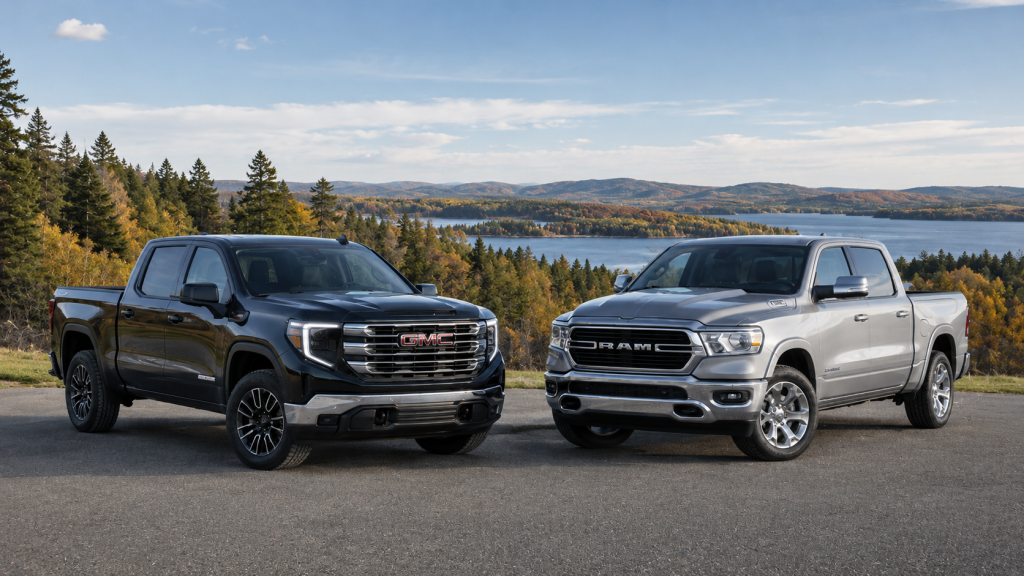
GMC Sierra 1500 vs Ram 1500 Starts With Configuration
Why can two trucks from the same model line carry different tow ratings? A tow rating reflects the engine, cab, drivetrain, axle, bed, and trailering equipment on that truck.
The Sierra 1500 and Ram 1500 both offer several powertrain and body choices. Therefore, the maximum published figure does not apply to every truck on a dealer lot. A Crew Cab 4×4 model may carry a different rating from another cab or drivetrain setup.
Additionally, engine choice changes how each truck handles loaded travel. The Sierra lineup includes gasoline engines and an available 3.0 liter Duramax diesel. Ram offers V6, Hurricane inline six, and HEMI V8 choices for 2026.
For Wisconsin truck shoppers, this means the comparison should begin with the job. A boat, utility trailer, camper, or work trailer places different demands on a pickup. Therefore, shoppers should match the trailer and cargo load to the exact truck configuration.
The Monroney label, trailering guide, and vehicle specific ratings provide the needed details. In addition, shoppers should verify payload on the truck itself. That figure can change with trim, cab, drivetrain, and installed equipment.
What Should You Compare Before Towing?
A towing setup combines trailer weight, payload, tongue weight, hitch equipment, and the truck’s published ratings. Each part works together when the truck is loaded.
The Sierra 1500 carries a higher published maximum tow rating for 2026 than the Ram 1500. However, shoppers should not stop at the headline number. The specific truck still needs enough payload and the correct trailering equipment.
Tongue weight becomes part of the truck’s carried load. Passengers, tools, coolers, and bed cargo use that same payload allowance. Therefore, a trailer can fit the tow rating while the total loaded setup still needs closer review.
Sierra trailering equipment can include Tow Haul mode, grade braking, camera views, and available trailering packages. These features support hitching, reversing, and loaded travel. Ram also offers towing technology and trailer focused equipment across several trims.
Before choosing either truck, compare:
- The truck’s specific tow rating should match the loaded trailer weight, not an empty brochure figure.
- Payload should account for passengers, cargo, hitch weight, and other items carried inside or on the truck.
- Trailering equipment should match the hitch type, trailer brakes, electrical connection, and planned towing routine.
A Wisconsin owner who tows a camper north for weekends may value different equipment from a contractor hauling tools. Therefore, the strongest comparison uses the exact trailer and cargo plan.
Winter Traction Requires More Than Four Wheel Drive
Is four wheel drive enough for Wisconsin snow? Four wheel drive sends engine torque through both axles, while the tires create grip at the road surface.
That distinction matters on packed snow, slush, and ice. A 4×4 truck still relies on tire tread, rubber compound, and driver inputs. Therefore, winter tires can change grip even when two trucks use similar driveline layouts.
Sierra shoppers can also look at X31 equipment and off road focused trims such as AT4. These configurations add hardware aimed at rougher surfaces and lower traction routes. Ram offers its own off road packages and trim choices.
In addition, ground clearance deserves attention where plowed snow builds near driveways, rural roads, or work sites. However, more clearance does not replace proper tires. Braking and steering still depend on the contact patch at each tire.
For Wisconsin winter use, review:
- Tire type should match expected snow and ice travel, since tread and rubber compound shape available grip.
- Four wheel drive hardware should be tested so the driver knows how engagement works before a storm arrives.
- Recovery points, underbody protection, and clearance may matter for rural roads, job sites, or deep snow.
Road salt adds another regional concern. Therefore, regular washing around wheel wells and underbody areas deserves a place in winter care. Shoppers comparing used trucks should also inspect exposed metal, brake lines, and fasteners for corrosion.
Cab and Bed Choices Change More Than Space
Does cab choice change more than passenger room? Cab and bed selections change body dimensions, curb weight, seating space, and available truck configurations.
Crew Cab models give rear passengers more room, which can suit families or work crews. However, that larger cab also changes the overall truck setup. Therefore, shoppers should review the rating for the exact cab and bed combination they plan to purchase.
Beyond that, bed design creates another clear difference between these pickups. GMC offers the available MultiPro Tailgate with several positions for loading, access, and work tasks. Ram offers available RamBox storage built into the bedside area.
Those designs solve different problems. MultiPro can make bed access easier and create alternate tailgate positions. By contrast, RamBox gives owners lockable storage outside the main bed floor.
A shopper carrying long lumber may value open bed space and tailgate access. Another owner may place more weight on secure storage for straps, tools, or smaller gear. Therefore, cargo routines should shape the comparison.
Furthermore, cab choice changes how people and gear share space. Rear seats may carry passengers during the week and equipment on other days. In addition, bed length can matter when hauling building materials, outdoor gear, or larger household items.
What Does Sierra Denali Add to the Decision?
Denali is an upper Sierra trim that adds distinct cabin equipment and available driving technology. It should be compared as a specific trim, not as the whole Sierra lineup.
Additionally, the cabin uses its own materials, trim details, and feature mix. Available Super Cruise also gives Denali shoppers another technology consideration for compatible roads. Therefore, frequent highway travel may place greater weight on this trim level.
A Ram shopper considering an upper trim should compare the same categories. Seat materials, display layout, driver assistance technology, audio equipment, and cabin storage all deserve review. The goal is to compare equipment that will be used, not trim names alone.
Denali also keeps the core truck questions in place. Towing needs, payload, drivetrain, cab choice, and bed layout still matter. Therefore, added cabin equipment should come after the truck meets the required work and travel needs.
For Wisconsin drivers, the final choice should reflect towing plans, winter travel, passenger space, and cargo routines. GMC Sierra 1500 vs Ram 1500 comparisons become clearer when each truck is matched to those needs. A test drive can then focus on seating, controls, visibility, ride feel, and the equipment you expect to use most.

