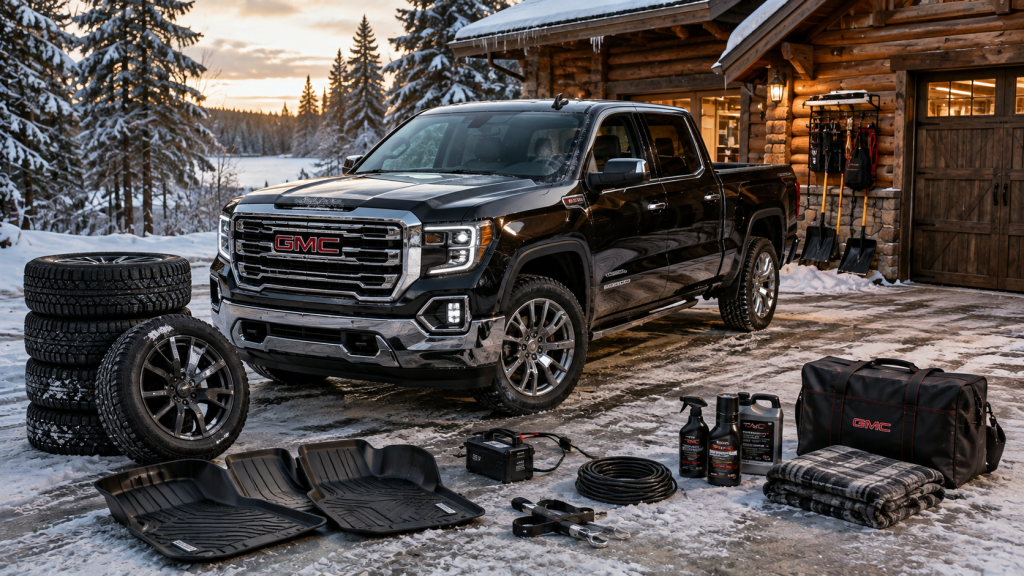



GMC winter accessory packages make more sense when each item answers a specific Wisconsin cold weather concern. Tires address grip on snow and ice. Underbody protection addresses salt and brine. Floor liners contain melted snow inside the cabin. Block heaters support very cold starts on compatible GMC models. Therefore, the strongest winter plan starts with the problems your GMC will face. GMC Winter Accessory Packages Should Start With the Road Which GMC winter accessories should come first? A winter accessory plan matches specific equipment with traction, corrosion, moisture, and cold start concerns. Wisconsin roads can shift from dry pavement to snow, slush, and ice within a single trip. Therefore, accessory choices should begin with the routes you drive. Rural roads, highways, job sites, and city streets place different demands on a GMC. In addition, road salt and brine create another issue beneath the vehicle. Those materials collect around seams, fasteners, suspension parts, and other exposed metal. Cabin moisture also rises as boots carry snow and grit inside. Because each problem is different, one accessory cannot cover every winter need. Tires manage road contact. Floor liners manage cabin debris. Protective coatings shield selected underbody areas. A block heater serves a separate cold start role on compatible models. For this reason, owners should rank winter equipment by the problems they face most. That approach makes the accessory list easier to evaluate. Do You Need Winter Tires With Four Wheel Drive? Winter tires use cold weather rubber and specialized tread patterns to create grip on snow and ice. Four wheel drive handles torque distribution through both axles. Those two functions work together, but they are not the same. Therefore, a four wheel drive GMC can still gain from tires made for cold weather. Tire rubber, tread depth, and sipes all shape how the contact patch interacts with the road. As temperatures fall, winter tire compounds stay more pliable than many all season compounds. That pliable rubber lets the tread conform more closely to uneven winter surfaces. Sipes also create extra biting edges across snow and packed ice. GMC owners should review these tire details before choosing a seasonal set: Winter tire size must match the vehicle and wheel specifications listed for that GMC. Tread depth should remain sufficient for snow evacuation and wet road drainage. Tire pressure should be checked because cold temperatures can lower pressure readings. A Sierra, Canyon, Yukon, Acadia, or Terrain may use different wheel and tire combinations. Therefore, owners should verify fitment before buying a seasonal set. Protecting the Undercarriage From Wisconsin Salt What does undercoating protect from Wisconsin road salt? Undercoating places a protective layer over selected underbody surfaces facing salt, brine, moisture, and road debris. Salt speeds corrosion when moisture and exposed metal remain in contact. Therefore, the underbody deserves attention before winter treatment begins. Existing rust, loose material, and trapped dirt should be inspected first. Truck frames, suspension hardware, brake lines, seams, and fasteners can all sit in salt spray. In addition, wheel wells and lower body areas collect slush during winter travel. Protective coatings can form a barrier over selected surfaces. Owners should inspect several areas before winter: Frames and crossmembers can show surface corrosion where coating has worn away. Brake lines and fasteners deserve inspection because salt can collect around exposed metal. Wheel wells and lower seams can trap moisture, grit, and brine after winter travel. Undercoating does not replace cleaning or inspection. Therefore, periodic washing remains useful after heavy salt contact. A technician should also identify existing corrosion before applying a new protective layer. For Wisconsin GMC owners, the main goal is simple. Protect clean metal early, then keep checking the areas receiving the most road spray. Keeping Snow and Slush Out of the Cabin Are all weather liners more than an appearance upgrade? Molded floor liners contain water, snow, ice, salt, and debris before those materials spread across carpeting. That containment matters during a Wisconsin winter. Boots carry slush into the cabin, where it melts into water mixed with grit and salt. Therefore, raised edges and molded channels serve a functional role. Model specific liners fit around the floor contours of a Sierra, Canyon, Yukon, Acadia, or Terrain. A precise fit also reduces open gaps near the edges. In addition, deeper channels give melted snow a place to collect away from surrounding carpet. Owners should remove the liners when pooled water or debris builds up. Then the liner can be emptied and cleaned before returning to the cabin. This routine keeps salt residue from sitting inside for weeks. Carpeted mats may still suit dry months. However, molded winter liners make more sense when snow and slush enter the vehicle. They also make spring cleanup easier after months of wet boots and road grit. When Does an Engine Block Heater Make Sense? An engine block heater warms engine components and fluids before startup in very cold temperatures. Availability varies by GMC model and configuration. A block heater works before the engine starts. Therefore, the owner connects it to an external power source for a set period. The added heat can make very cold starts less demanding on the engine. Current Sierra HD configurations provide a clear GMC example. Some offer an engine block heater as factory or available equipment. However, owners should verify the equipment list for their exact truck. Does every Wisconsin GMC need one? No. Local temperatures, parking location, engine type, and factory equipment all shape the decision. A garage parked vehicle may face different cold from a truck that sits outside overnight. In addition, an owner should confirm the correct connection method and operating instructions. The owner's manual provides model specific guidance for installed equipment. GMC winter accessory packages work best when each item answers a clear seasonal problem. Start with tires, then review salt protection, cabin moisture, and cold start needs. That gives Wisconsin owners a focused plan before snow and road salt return.